

手机站
安卓App下载
微信公众号
手机站
安卓App下载
微信公众号
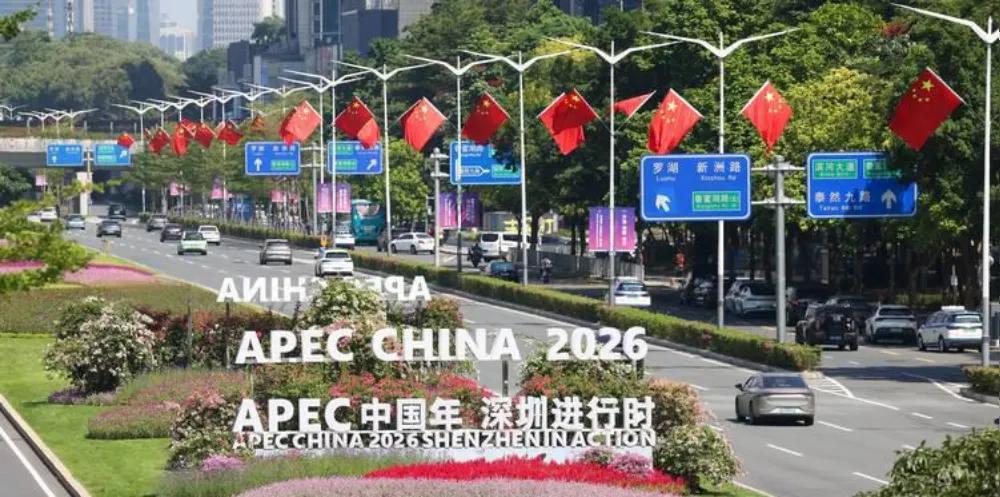
11月14日,CGTN(中国国际电视台)正式上线专题片《Driving innovation: Shenzhen's approach to AI governance in the Asia-Pacific》(驱动创新:深圳面向亚太的AI治理实践)。专题片围绕APEC经济体在AI时代的共同挑战展开,迪博技术等六家福田企业作为产业代表接受采访,向世界展现中国科技企业的前沿探索。
六家企业跨越司法风控、基础设施、网络安全、企业数字化、医疗健康及生命科学六大领域,以定制化大模型的应用实践,提供了兼顾创新与风控的"深圳方案"。迪博技术作为司法风控领域的代表企业,凭借在AI辅助审判领域的深厚积累,为专题片贡献了独特的深圳视角。
一、AI政务经验跨区域参考的边界
迪博技术创始人胡为民在接受采访时,围绕"亚太AI治理的深圳实践"分享了深刻见解。
在中国法治国际论坛上,多国司法外宾亲身体验了深圳AI辅助审判系统,不少代表表达了借鉴经验的意愿,但同时也表示不能直接照搬整套系统。面对APEC内部各经济体法律体系和发展水平的巨大差异,迪博技术的实践给出了清晰的答案。

可借鉴的共性经验
从迪博技术的实践来看,AI辅助审判的核心方法论具有跨区域参考价值:
人机协同的架构设计
——机器辅助、人类决策,这是负责任AI的核心原则。无论何种法律体系,AI的定位都应是增强人类能力,而非替代人类决策。
工程方法论
——迪博技术提出了"冰山模型"架构:水面上10%的模型能力,水面下90%的底层工程才是关键。同时采用"小模型大智慧"的技术思路,通过工作流精细化设计把复杂业务拆解为子节点,按需调度轻量模型。
六层风险防线
——"协同核验+输出溯源+知识必检+内容锁边+决策不填+对抗推演",这是高责任场景下AI可信输出的通用框架,为各类AI治理提供了方法论参考。
不能直接复制的原因
各经济体之间存在三重差异,决定了AI系统无法"一刀切":
•
法律体系差异
——APEC各经济体涵盖大陆法系、普通法系、混合法系,对AI的接受度和规制要求各不相同
•
司法传统不同
——程序规则、证据制度、裁判逻辑存在差异,AI模型需要适配本地法律逻辑
•
发展阶段不同
——基础设施、人才储备、数据积累存在差距,需要因地制宜
因此,APEC内部AI合作应聚焦方法论交流和标准制定,而非系统输出。深圳经验的价值在于提供实践参考,帮助各经济体找到适合自身的发展路径。
二、"人机协同"对APEC负责任AI发展的启示
迪博技术的司法AI系统坚持"人机协同,法官掌握最终决策权",机器只承担辅助工作。这一实践对APEC经济体平衡AI创新应用与风险伦理管控带来三点重要启示:
第一,明确AI的辅助定位。
AI不是替代人类决策,而是增强人类能力。系统上线运行两年余,已辅助办理案件70余万件,无一例产生幻觉,取得显著业务成效:2025年深圳法院法官人均结案744件,同比增长60%;案件上诉率、一审发改率较系统上线前分别下降48%、65%。这证明AI辅助模式既释放了技术红利,又守住了责任底线。
第二,建立可解释、可追溯的机制。
AI的每一个建议都要有依据、可审查,确保人类决策者能够理解并判断AI输出的合理性。迪博技术构建了六层风险防线,做到输出结果有据可依、有源可溯、有人把关。
第三,因地制宜制定治理框架。
APEC各经济体应根据自身法律传统和发展阶段,制定适合的AI治理规则,在创新与伦理之间找到平衡点。深圳的实践证明,负责任AI不是创新的阻碍,而是可持续发展的保障。

三、深圳实践的全球意义
深圳的实践为APEC区域AI合作提供了可参考的治理范式——
以工程体系保障安全,以人机协同守住底线,以开放合作促进发展
。
CGTN专题片的上线,标志着深圳AI治理实践正式走向国际舞台。作为国家治理现代化进程中的重要科技力量,迪博技术始终秉持"让人工智能辅助审判事业持续领跑全球"的使命。未来,迪博技术将继续以深圳法院人工智能审判取得的成效为例,将方法、经验应用于千行百业,赋能新质生产力,为推进国家治理体系和治理能力现代化贡献迪博智慧。
深圳的AI治理实践正成为连接亚太各经济体的桥梁,共同探索人工智能时代治理现代化的新路径。
CGTN Special Report Goes Live:DIB Technology Showcases Shenzhen's AI Governance Practices as an Industry Representative
On November 14,CGTN (China Global Television Network) officially released thespecialreport"Driving innovation: Shenzhen's approach to AI governance in the Asia-Pacific" together with a feature article. Focusing on the shared challenges facing APEC economiesinthe AI era,the features interviews with six companies based in Futian,Shenzhen — including DIBTechnology — as industryrepresentatives,showcasing the pioneering exploration of Chinese tech enterprises to the world.
The six companies work across judicial riskcontrol,infrastructure,cybersecurity,enterprise digitalization,healthcare and life sciences. Each applies customized large-model solutions initsown field,and they offer a “Shenzhen apporach” that balances innovation with risk control.DIBTechnology,the representative of judicial risk control,drew on its deep experience in AI-assisted adjudication tocontributea distinctiveShenzhen perspective.
I. The Boundaries of Cross-Regional Reference for AI Governance Experience
Hu Weimin,founder ofDIBTechnology,shared in-depth insights on "Shenzhen's PracticeinAI Governanceforthe Asia-Pacific" during the interview.
At the China International Forum on the Rule of Law,judicial delegates from a number of countries experienced Shenzhen's AI-assisted adjudication system first-hand. Many expressed a willingness to draw on this experience,while also noting that the entire system could not simply be transplanted wholesale. Facing the vast differences in legal systems and development levels among APEC economies,DIBTechnology’s practiceprovidea clear answer.
Transferable Common Experience
FromDIBTechnology's practice,the core methodology of AI-assisted adjudicationcarriescross-regional reference value:
Human-Machine Collaborative Architecture
—Machine assistance,human decision-making. This is the core principle of responsible AI. Under any legal system,AI should be positioned to enhance human capabilities,not to replace human decision-making.
Engineering Methodology
—DIBTechnology has proposed an "iceberg model" architecture: the 10 percent above the waterline is model capability,while the 90 percent beneath it — the underlying engineering — is what truly matters. The company also adoptsa "small model,great wisdom" technical approach,breaking down complex business processes into sub-nodes through refined workflow design,anddispatchinglightweight models on demand.
Six-Layer Risk Defense
— "Collaborative verification + output traceability + mandatory knowledge checking + content boundarycontrol+ non-automated decision-making + adversarial simulation." This is a universal framework fortrustworthyAI output in high-responsibility scenarios,providing methodological reference for various AI governance across domains.
Why It Cannot Be Directly Copied
Three types of differences exist among economies,determining that AI systems cannot be "one-size-fits-all":
•
Differences
in Legal system
— APEC economies cover civil law systems,common law systems,and mixed legal systems,with varying degrees of acceptance and regulatory requirements for AI.
•
Different Judicial Traditions
— Procedural rules,evidence systems,and adjudicative logic differ,soAI modelsmust beadaptedto local legal logic.
•
Different Development Stages
— There are gaps in infrastructure,talent reserves,and data accumulation,requiring localized approaches.
Therefore,AI cooperation within APEC should focus on methodological exchange and standard-setting,rather than system export. The value of Shenzhen's experience lies in providing practical reference to help economies find development paths suitable for themselves.
II. Implications of "Human-Machine Collaboration" for Responsible AI Development in APEC
DIBTechnology's judicial AI system adheres to "human-machine collaboration,with judges retaining final decision-making authority," with machines only performing auxiliary functions. This practice brings three important implications for APEC economies to balance AI innovation and application with risk and ethical control:
First
,
clarify the auxiliary role of AI.
AI is not meant to replace human decision-making,but to enhance human capabilities. After more than two years of operation,the system has assisted in handling over 700,000 cases,with zero instances of hallucination,achieving significant results: In 2025,Shenzhen court judgesclosedan average of 744 cases per person,ayear-on-year increase of 60%; the case appeal rate and first-instance remand and reversal rate decreased by 48% and 65%respectively compared with the period before the system was launched. This demonstrates that the AI-assisted model both releases technological dividends andsafeguards the baseline of accountability.
Second
,
establish explainable and traceable mechanisms.
Every AI recommendation must be based on evidence and reviewable,ensuring that human decision-makers can understand and judge the rationality of AI output.DIBTechnology has built a six-layer risk defense system to ensure that every output is grounded in evidence,traceable to its source and subject to human oversight.
Third
,
develop governance frameworks tailored to local conditions.
APEC economies should formulate AI governance rules according to their own legal traditions and development stages,striking a balance between innovation and ethics. Shenzhen's practice demonstrates that responsible AI is not an obstacle to innovation,but a safeguardfor sustainable development.
III. The Global Significance of Shenzhen's Practice
Shenzhen's practice offers a referable governance paradigm for AI cooperation across the APEC region — safeguarding security through engineering systems,upholding bottom lines through human-machine collaboration,and promoting development through open cooperation.
The launch of the CGTNspecial reportmarksthatShenzhen's AI governance has officially stepped onto the international stage. As an important technological force in the process of modernizing national governance,DIBTechnology always uphold the mission of"enabling AI-assisted adjudication to continue leading the world".Going forward,building on the proven achievements of AI-assisted adjudication in Shenzhen courts,DIBTechnology will extend its methods and experience to a wide range of industries,empowering new quality productive forces and contributing DIBwisdom to advancing the modernization of China's governance system and governance capacity.
Shenzhen's AI governance practice is becoming a bridge connecting APEC economies,jointly exploring new paths for governance modernization in the age of artificial intelligence.
CGTN(中国国际电视台)报道链接: